

I don’t take a lot of time off from (gestures wildly at) all that goes on here, and despite the fact that I travelled to the other side of the continent, the past few days were no exception. What I didn’t expect was that it was also a chance to connect with the history of our country.
If anyone could have found a way to make a mini-break political, it would be me.
I traveled to St. John, New Brunswick to attend a graduation ceremony for a young relative. As further proof of his adulting, he didn’t have plans after the grad ceremonies with friends and went out to dinner with his family instead. The friends will celebrate together next week because it was the earliest they could all manage the same time off. Welcome to this new life stage, young sir.
I also managed, through a chance layover and then a broken plane, to spend a few bonus hours in Toronto on both the way there and back. As a stressed out Albertan whose government is pushing separation for their own benefit, it was a welcome distraction that I didn’t expect to be at all gratifying in the way it was.
During the first layover in Toronto we took the train from the airport into the heart of the city; and then we walked. I’m not a city girl but the one thing I love about cities is a historical downtown core— and Victorian era residences.
I was born in Calgary and raised in a typical railway-dotted town surrounded by rural Alberta. I’ve never lived in a major centre, with Red Deer and Saskatoon being the largest in Canada and then a mammoth called Kansas City in the U.S.. I don’t love cities. Sure, they have more amenities but I hate traffic and we need better public transit.
I love living in smaller centres surrounded by rural because I can marvel at the never-ending skies of the prairies without buildings obstructing my view (though some are worth it, at least briefly). I obsess over the fact that those skies are the most incredible crisp blue for 8-10 months of the year and as much as I love the warmth of summer, I miss the sharp blue of the cooler, and coldest, seasons. It’s my favourite part about the arrival of autumn; the return of that clear and stark blue.
I will probably never live in a city again, or the mountains for that matter, because the vast expanse of prairie is the space that feels the most unencumbered, boundless, and therefore “free”. While I am intensely attached to that freedom, I have no attachment to the land itself. I have no personal history with it, even if a few generations of my ancestors did.
I feel more attached to buildings. One of my ancestors immigrated to Canada to build; my great-great grandfather, John Fairweather, was a Scottish stone mason who helped construct Calgary’s sandstone buildings. It makes sense, really; one of my ancestor’s farms (his daughter-in-law’s family) was in Beddington (yes, the same Beddington that is now a community in north Calgary), and another (his son’s) was in Springbank. The farms are long gone, replaced and repurposed by entire communities, but the sandstone buildings my great-great grandfather helped build are still there.
When I worked as a post-secondary ambassador with Learning Clicks, I traveled all over central, and much of southern, Alberta. I was mostly presenting post-secondary options in small towns and I would go out of my way to find the courthouses in each because if they were still there, they were architecturally authentic. They were also more than just buildings to me; they are reminders of law and therefore order. The law hasn’t always been right— it is human, after all— but it was based on reason. In a world of so much unknown, it was something that could be reliable, knowable, and understood. It could even be reinterpreted when challenged with solid, reasoned arguments.
I appreciate the old farm buildings and homesteads that are prevalent still in rural Alberta today— weathered, most of them falling but not fallen, as if in tribute— but the courthouses represent the arrival of rights and fairness in an environment that had been ruled by might and force. Of course it didn’t work in everyone’s favour at first— even for people like me— but it was the beginning and is a history I identify with, even though I come from a far longer line of labourers.
It’s because I identify with that aspect of history more than how my family settled in Alberta that I was perhaps always destined to feel more Canadian than Albertan. The former has a history that necessarily required both building and tending but the latter has decided only the tending deserves recognition. I love the prairies and I don’t want to live in a city of stone and shade, but I am drawn to the fact that they represent the beginning of a future that I have been able to experience.
So, the past few days could not have been more enjoyable for me; seeing the history of building a nation that is personally meaningful— in brick and sandstone.
In Old Toronto, there is a mix of old and new(er); a visual celebration that encompasses both history as well as change and growth.
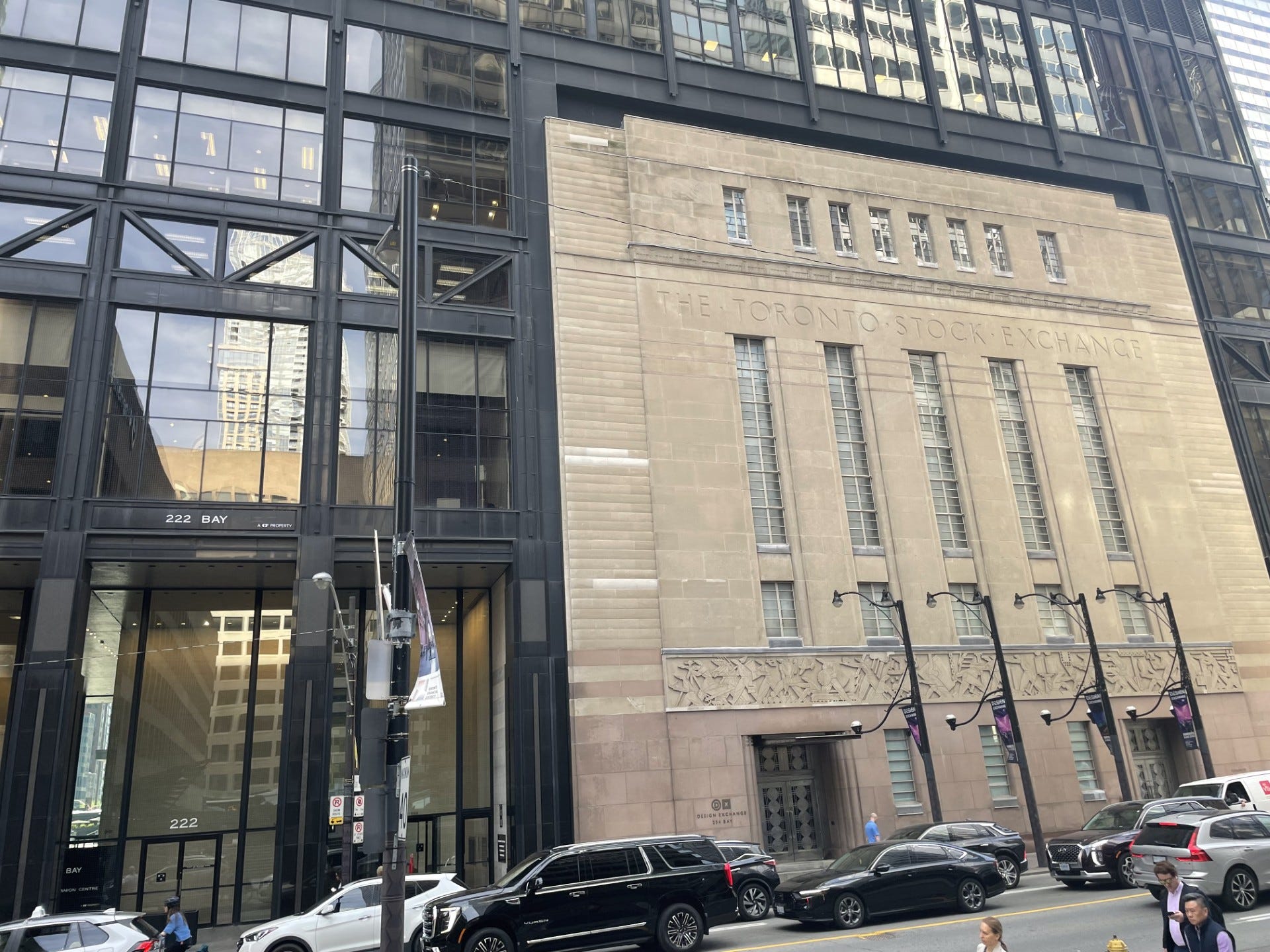
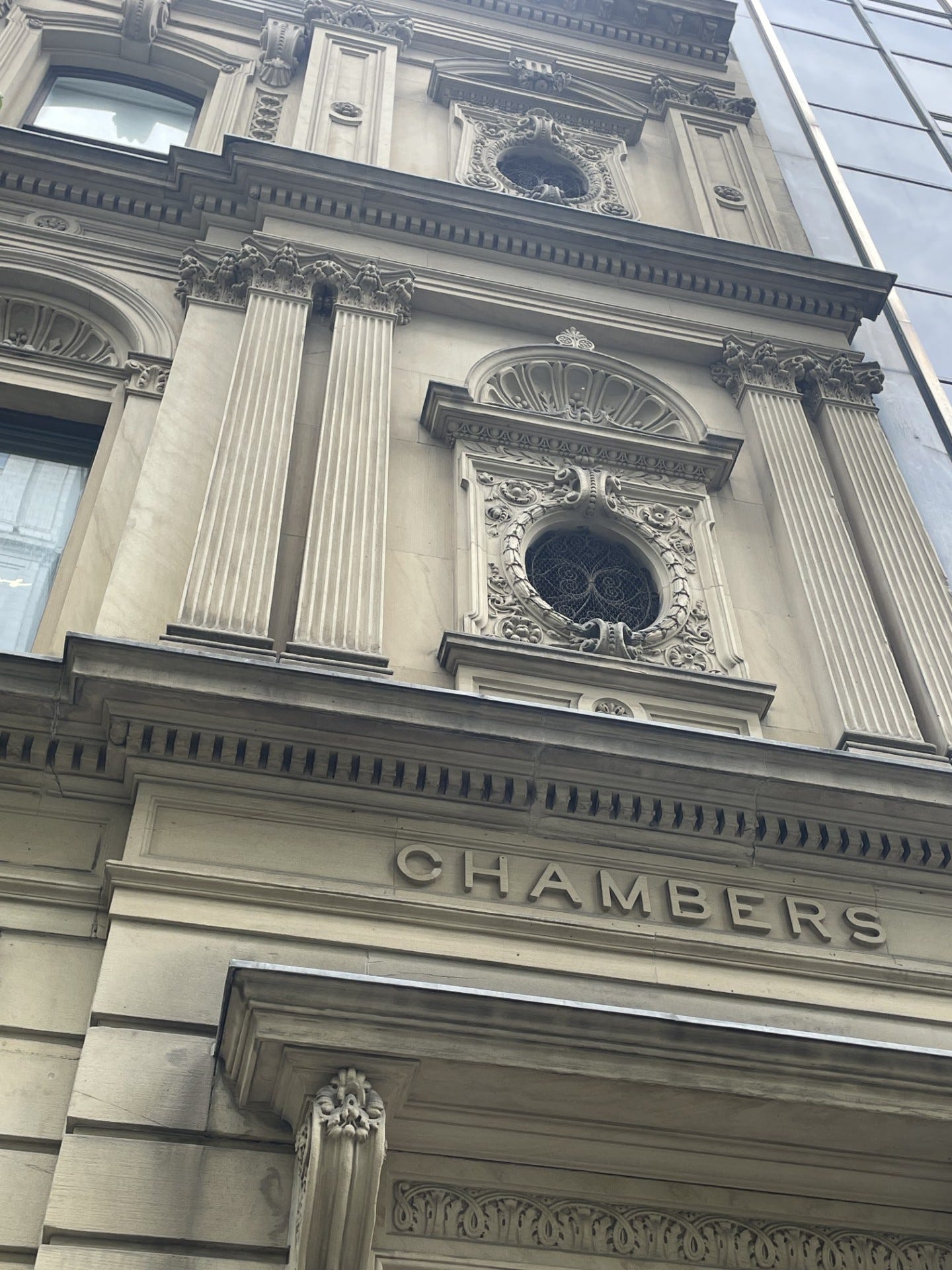
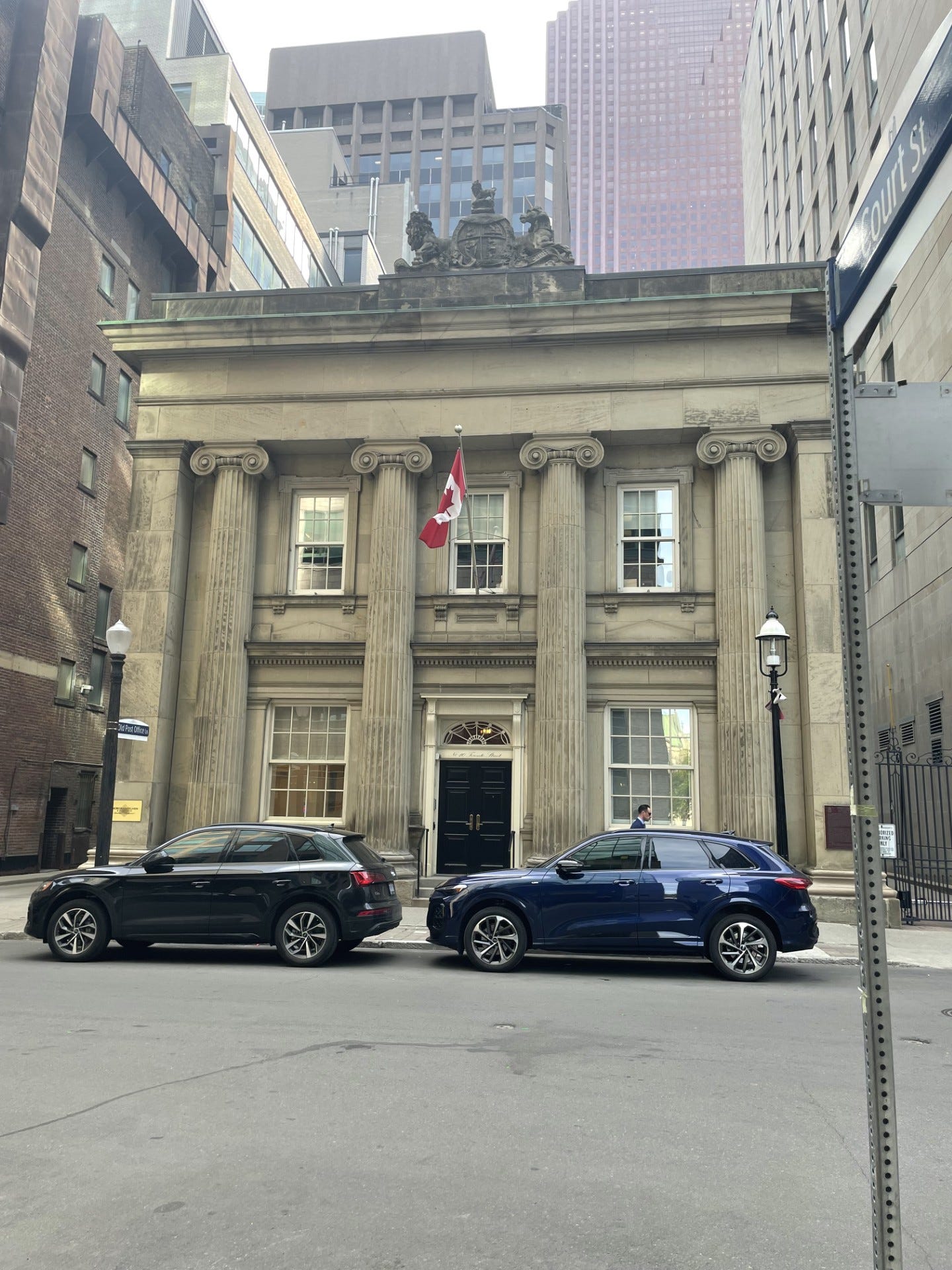
I also felt more of a connection to Canada’s history there, which shouldn’t be surprising— Old Toronto was around before Alberta became a province of Canada. Then again, the city of Calgary was incorporated as a town in 1884 and as a city in 1894, too. My great grandfather was born before Alberta was a province; we are the babies of confederation. Pun unintended but accepted.
The brief walk around Old Toronto changed my perspective of the trip. Suddenly, I wasn’t just going to see a graduation, I was going to experience history.
Some tried to downplay Saint John— including the city’s website. What is there to do in Saint John? Walk. Walk through the parks, on the boardwalk, or through the historic Uptown, probably named for fact that everywhere you want to go is on an incline. It was the most outside, and walking, I’ve done in recent years that wasn’t on a golf course— and even I don’t do back-to-back days.
We arrived late at night, so I had little idea what was around us until the next morning. For a person who loves east coast architecture, it did not disappoint. Me. It didn’t disappoint me but my little gasps, oohs and ahs did manage to become something my fellow travelers learned to ignore. It probably wasn’t something everyone needed to see— just a door, or another brick structure, or a cool window arch; as you were.
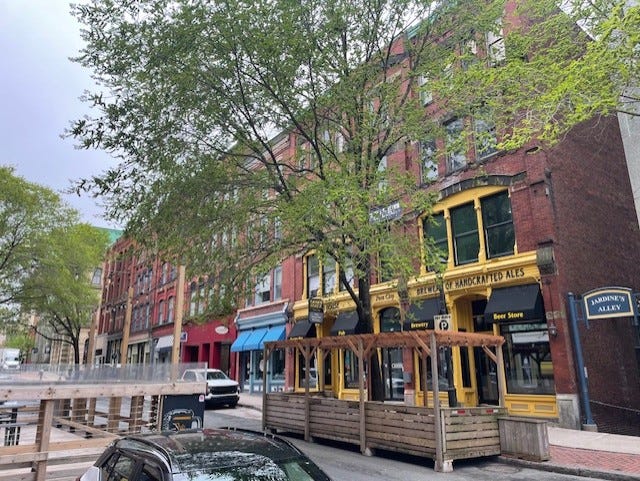
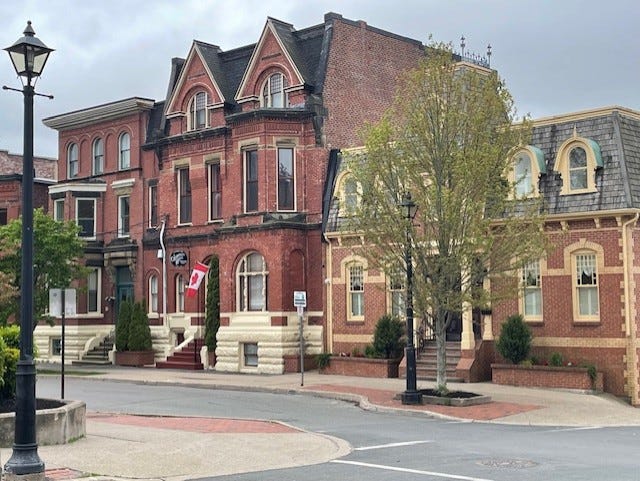
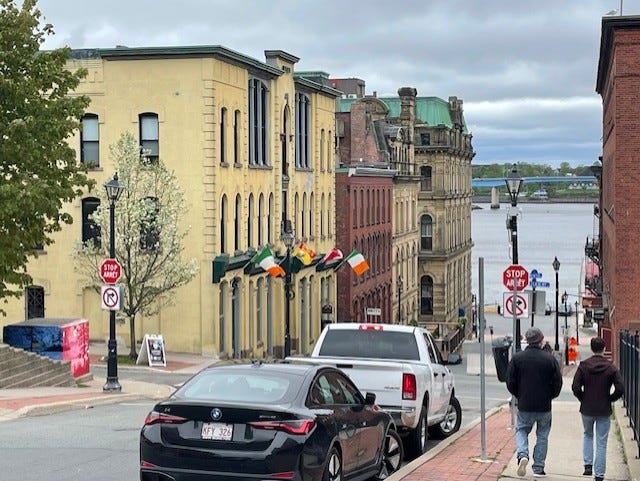
My history lesson began, out of order, at the boardwalk. The fire of 1877 that burnt more than 1,500 structures in the port area (and began in a building owned by Henry Fairweather; not one of my relations) received assistance for its rebuilding from far outside our borders. The governments of Canada and Ontario sent funding, but so did Scotland, Maine, and the city of Chicago.
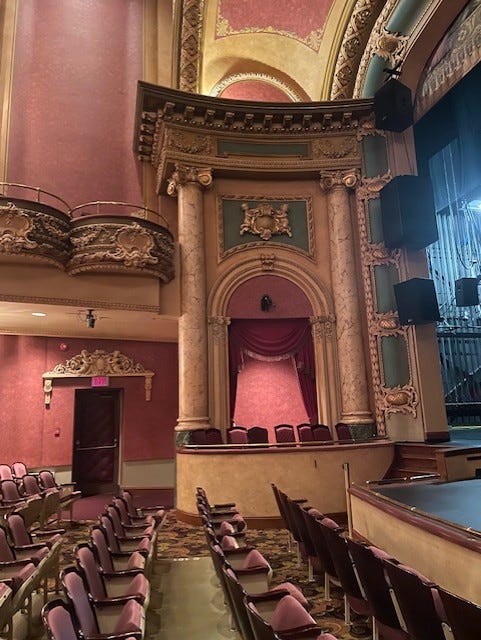
The Imperial Theatre is just astounding and I had to include a photo. This incredible space was lovingly refreshed by assistance from the people of Saint John through a grassroots campaign started by a local taxi driver. Each seat has a dedication by whomever donated for them. My favourite was “this seat is haunted— enjoy the show!” Legendary choice.
Built in 1912 by a New York firm based on plans designed in Philadelphia, it was a destination— as was most of the port city. However, it wasn’t just a destination for visiting, it was also a destination for United Empire Loyalists.
Loyalist House, which was spared in the 1877 fire and occupied by five generations of the founding family, is named for its federalist-era architecture, but also as a reminder that Canada was a welcoming home for those who could leave the rebellious republic down south. Not far from it sits the Loyalist cemetery, where the headstones are so weathered some are no longer legible. A plaque at the King Street entrance has the following inscription:
Within these Burial Grounds lie the remains of immigrants, rich and poor, who left their homes and arrived on our shores filled with courage and determination to establish for themselves and their children a way of life free from persecution and hostilities.
This site was chosen in 1783 by Loyalist Settlers of Saint John as the location of their first Church and Burial Ground.
Under the guidance of your hand, O Lord. They sought refuge and found solace on shores. May they rest in peace knowing that their descendants now flourish.
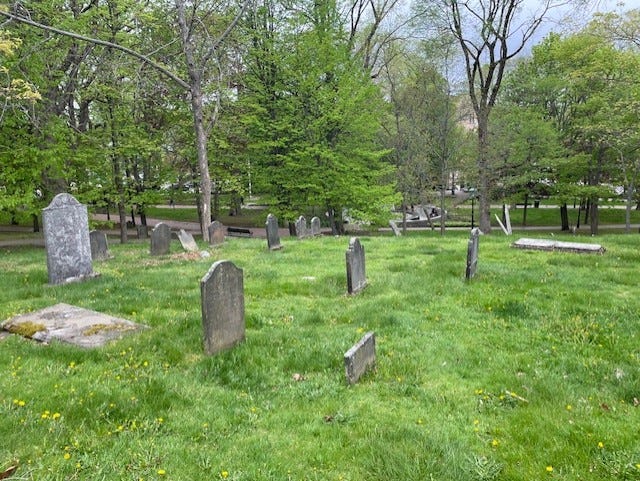
Over 15,000 British Loyalists were offered land in Saint John after the Revolutionary War, and many of them accepted. Between those who did and the many immigrants who followed there were so many settlers in Saint John that, in 1785, King George III established Saint John as the first incorporated city of Canada.
To my great surprise, I had not only traveled to the other end of the country, but into the very city that preceded the birth of a nation that the governing party of Alberta is demanding we reconsider being part of.
As if we’re in Canada by chance and not choice.
My ancestors came to Canada, even if Alberta proper wasn’t yet part of it by law. They arrived by boat, wagon, and train. They chose to be in this country of opportunity and promise. I have already had the opportunity to choose it once and after a few days of being reminded that so many chose it before me, I’m no longer as chuffed that Danielle Smith and the UCP are demanding I put that in writing in October.
I already choose it every single day.
Thanks to everyone who reads, shares, and becomes a free subscriber. Please consider becoming a paid subscriber to support my work; to those who have, your support is greatly appreciated!
Thank you for this. Too many forget their heritage began in Canada. As you so aptly put it, many of our ancestors did not come to Alberta even though that may have been their settling point - they came to Canada. My father did not go to war to defend Alberta - he went to defend his country. We can love our prairies and mountains or wherever we feel most at home but it is first and foremost part of something bigger, greater and still worth fighting for. My Dad would be outraged at the nonsense going on in Alberta now and would see straight through the doe eyed “I love Alberta and now conveniently Canada (but not Ottawa)” sewage being spewed by our self serving Premier.
Interesting how we each connect to all of this.
Since this nonsense started I’ve reflected more on my family than I ever did.
My dad’s grandparents emigrated to Alberta in the late 1890’s from Bedeque County P.E.I. The family was United Empire Loyalists turfed out of the US in the late 1780’s.
My dad’s grandfather landed a job with the town of Calgary, in charge of empty lots.
Now what kind of job was that, at least that was my thought three generations removed.
Empty lots equaled garden space. Few people owned lots or houses then so growing a garden was key to life then. I’ve come to think of this as the family entry to real estate.
My grandfather played in the first Grey Cup against Toronto, my dad was marble champion in Edmonton(so he said anyway 60 years ago)
My parents both born in Edmonton one in 1911 the other in 1920. Both served overseas during WWll.
They chose Alberta, I choose Alberta. Like you I’m drawn to the big skies, not so much the winter weather, but the skies the history, the changes.
I’ve lived in High River within four blocks since 1961, it fits me, it gave me a life, its people allowed me business opportunities, the community was kind to our us and our kids, we have solid friends. Hell I still toboggan behind my place on Logan’s Hill. We have two funeral homes both run by a Snodgrass, both have instructions on what to do with my carcass. Tell me, where else am I going to find this life- I’m not.
So to me it’s simple Deidre. One of us has to go and it’s not me.
So Dani, pack up, take your traitors with you. Me and mine we’re staying